

On June 4, we had the opportunity to attend Infopresse’s 2026 Content Creation Summit, a one-day event that brought together strategists, creators, media outlets, and brands to discuss the future of content.
Across eight panels, speakers addressed topics as diverse as artificial intelligence, new consumer habits, podcasts, dark social, personal branding, and content strategies that leave a lasting mark on popular culture.
Here are the key takeaways from today.
Weak signals are sometimes more valuable than trends
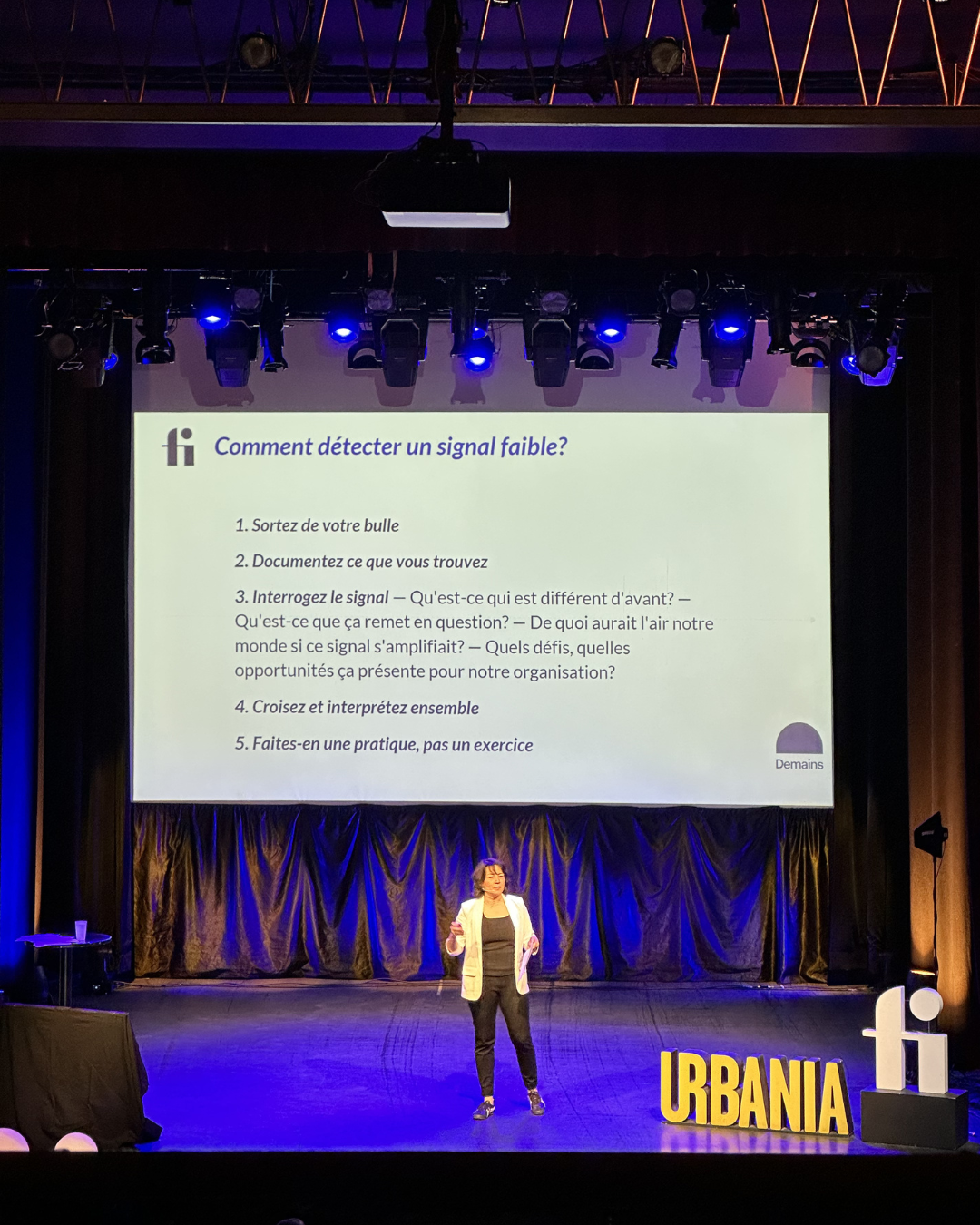
The day began with Catalina Briceño, a professor at UQAM’s School of Media and co-founder of La Société des demains.
His main point: trends can become a trap.
When a trend is everywhere, it’s often already on the wane. To understand where the market is headed, it’s better to learn how to spot weak signals—those emerging behaviors that still seem marginal today.
Several of the examples given concerned younger generations.
According to a Harris Poll survey conducted in March 2026, 79% of Gen Zers feel a sense of nostalgia for TikTok’s early days, when there were fewer ads, fewer brands, and fewer influencers.
Another surprising finding: Gen Z creators currently have the lowest adoption rate of artificial intelligence among all age groups.
Young people are also beginning to question some of the current norms of social media. They feel that content creators are becoming too formulaic and are looking for new markers of authenticity.
Among Generation Alpha, nearly 40% of young people say they are uncomfortable speaking publicly on social media. They prefer private spaces such as Discord, closed groups, and private conversations.
Catalina also presented a particularly fascinating topic: the emergence of the digital memory market.
Some companies are already developing AI-powered avatars that allow loved ones to continue interacting with a deceased person using their memories, voice, and archived content.
An idea that seems futuristic today, but could become a very real market tomorrow.
We have entered the age of resonance
The second panel was moderated by Fabrizio Barrios Bazo, a senior consultant in content strategy and social media.
According to him, we are currently undergoing a major change.
For a long time, brands sought to maximize their reach.
Today, they should instead focus on creating resonance.
In an environment where everything is optimized, perfectly put together, and designed to grab attention, imperfection paradoxically becomes a sign of trust.
One statistic illustrates this phenomenon well: 66% of Canadians say they are wary of the content they consume online.
In the face of this skepticism, consumers are looking for authenticity.
Fabrizio cited the example of Mid-Day Squares, a Quebec-based company that has built its brand by documenting virtually everything that happens within the company.
They share:
their crises;
their mistakes;
their financial difficulties;
their conflicts;
their rebranding efforts;
their new packaging;
the positive and negative feedback from their customers.
They show both the good moves and the bad ones.
As a result, the company generated more than $30 million in organic revenue thanks to this approach focused on storytelling and transparency.
The bottom line is simple: people want to see behind the scenes. They want to see what works, but also what doesn't.
We have entered an era in which vulnerability can become a competitive advantage.
TikTok has become a cultural search engine
According to Fabrizio, TikTok is no longer just an entertainment platform.
The platform has become a true cultural search engine.
Today, 74% of Gen Zers search on TikTok before even turning to Google.
People aren't just looking for funny dances or videos anymore.
We are looking for:
recommendations;
tutorials;
testimonials;
complex answers;
reviews of products or services.
For businesses, this means they need to better document their expertise and address consumers' actual questions.
Every video can serve as a gateway to the brand.
LinkedIn wants less success and more humanity
Another particularly interesting point concerned LinkedIn.
According to Fabrizio, highly corporate case studies are gradually losing their effectiveness.
The algorithm places greater emphasis on human interactions.
The content that performs best today is often the kind that features:
an apprenticeship;
a failure;
a reevaluation;
a personal reflection;
a key milestone in an entrepreneur's journey.
In other words, people want to see the process, not just the end result.
Reddit has a greater influence on decisions than we realize
Fabrizio also took to Reddit.
In his view, many companies still underestimate its influence.
In particular, he cited the example of Wealthsimple, which agreed to openly answer users’ sometimes highly critical questions.
The platform requires brands to demonstrate a level of transparency rarely seen elsewhere.
And with the rise of AI-powered search engines, Reddit threads are appearing more and more frequently in search results.
Authentic conversations thus become a major source of influence.
Dark social is changing our performance metrics
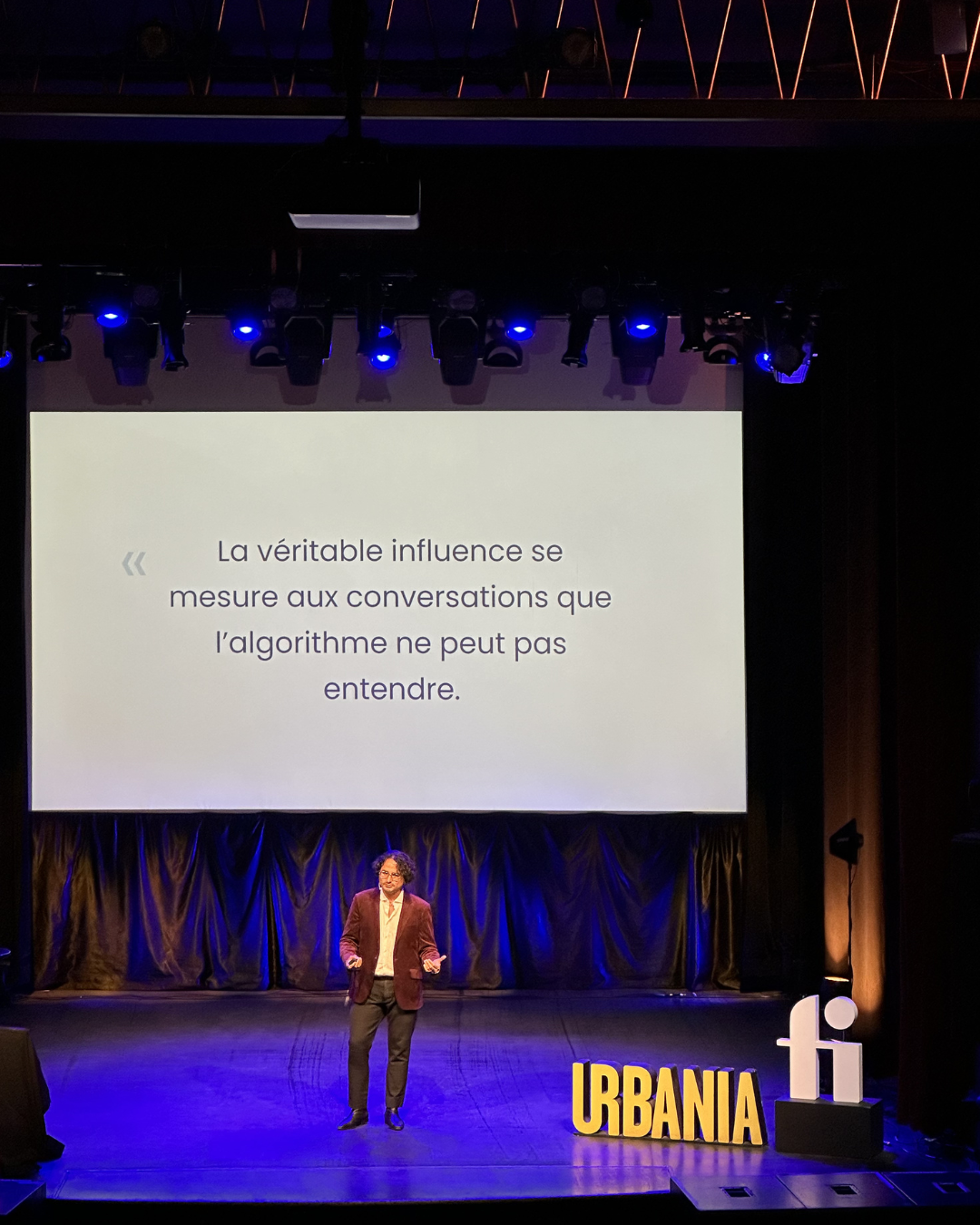
Another concept that came up several times throughout the day was that of "dark social."
This includes all conversations that take place in private messages, Messenger groups, WhatsApp, Discord, or other closed groups.
These interactions are virtually impossible to measure.
Yet they have a huge influence on purchasing decisions.
According to Fabrizio, several traditional KPIs are gradually becoming less relevant.
For example:
the number of views becomes less important;
the range loses its value;
Likes tell only part of the story.
The indicators to watch are rather:
viewing time;
backups;
sharing via private messages.
Because content you share with a friend is often much more valuable than content you like publicly.
Podcasts continue to gain popularity
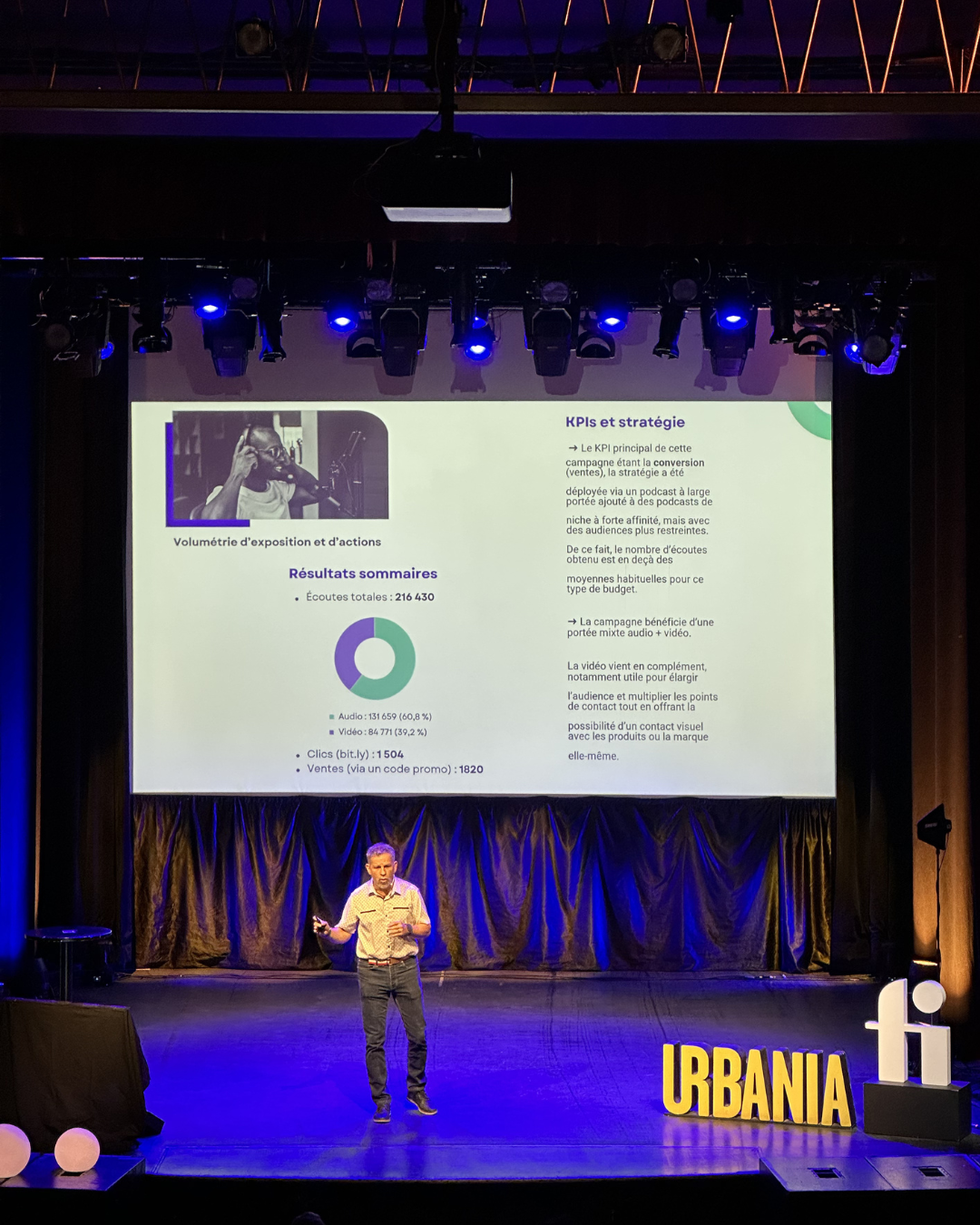
The panel discussion featuring Stéphane Berthomet, CEO of Podpass, confirmed that podcasting is far from having reached its full potential.
According to the data presented, between 26% and 45% of Canadians regularly listen to podcasts.
Even more interesting: when people adopt this format, their consumption tends to increase over time.
The relationship between the listener and the host fosters an exceptional level of trust.
More than 80% of listeners say they take action after hearing an ad on a podcast, whether that means talking to someone about it, visiting a website, or making a purchase.
Nearly 73% of listeners listen to commercials all the way through, especially when they are read directly by the hosts.
A case study presented during the panel discussion highlighted a campaign created for a sportswear brand:
7 podcasts;
216,000 streams;
1,500 clicks;
1,820 sales attributed to a promotional code.
Results that give pause for thought.
Educational content directly influences sales
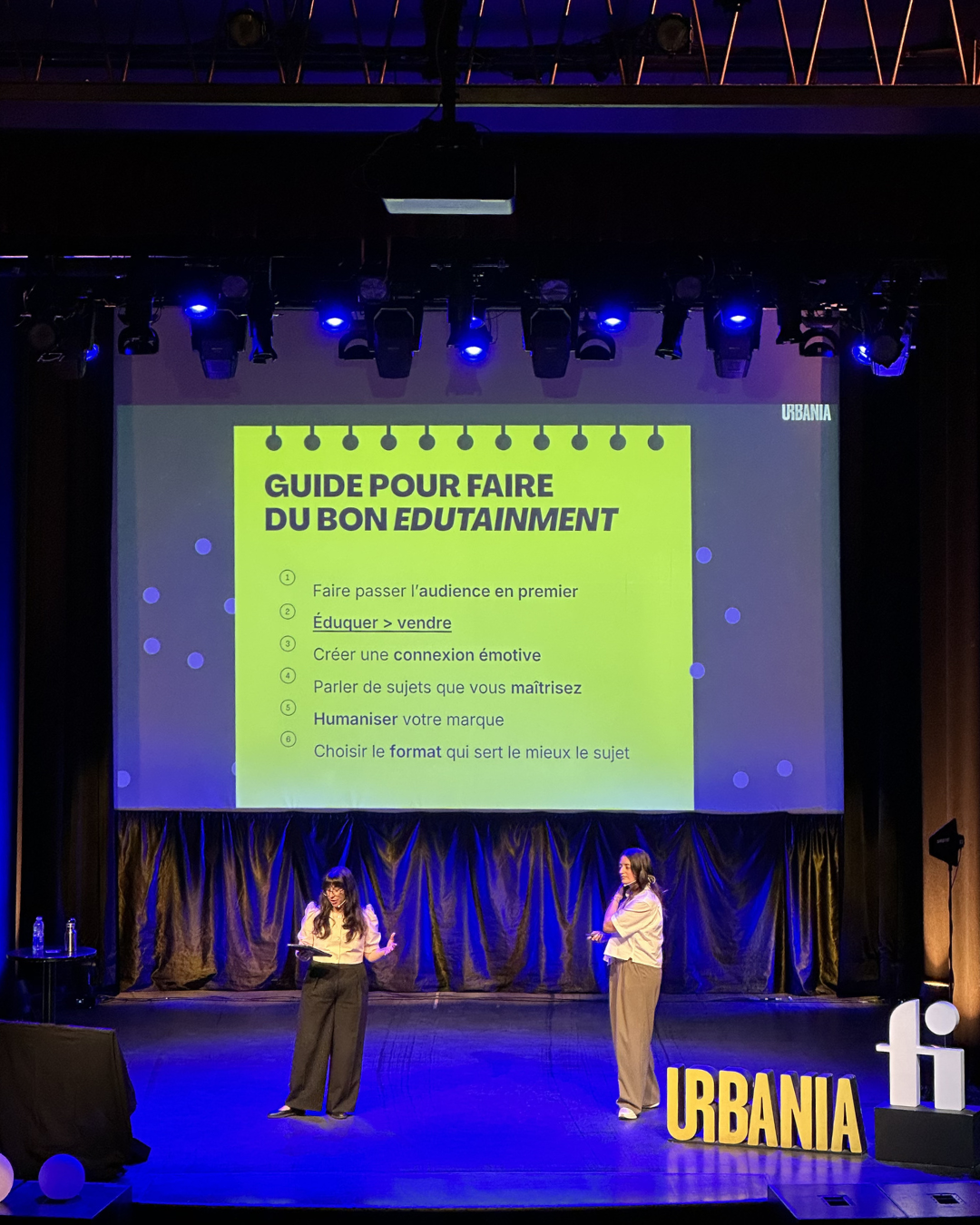
The panel presented by URBANIA focused on edutainment, which is a blend of educational content and entertainment.
The statistics presented were particularly revealing.
70% of internet users prefer to discover a brand through its content rather than through its advertising.
Even more impressive: consumers are reportedly 131% more likely to make a purchase after consuming educational content produced by a brand.
The examples presented included, among others:
Jackson's Art Supplies, which markets its products using references to popular culture;
CeraVe, which uses humor to make its expertise more accessible;
"The Family Budget," a series that provides a practical look at the real cost of raising a child.
The message is clear: brands are better off sharing their expertise rather than just talking about their products.
Mike at RONA: When a Campaign Becomes a Cultural Phenomenon
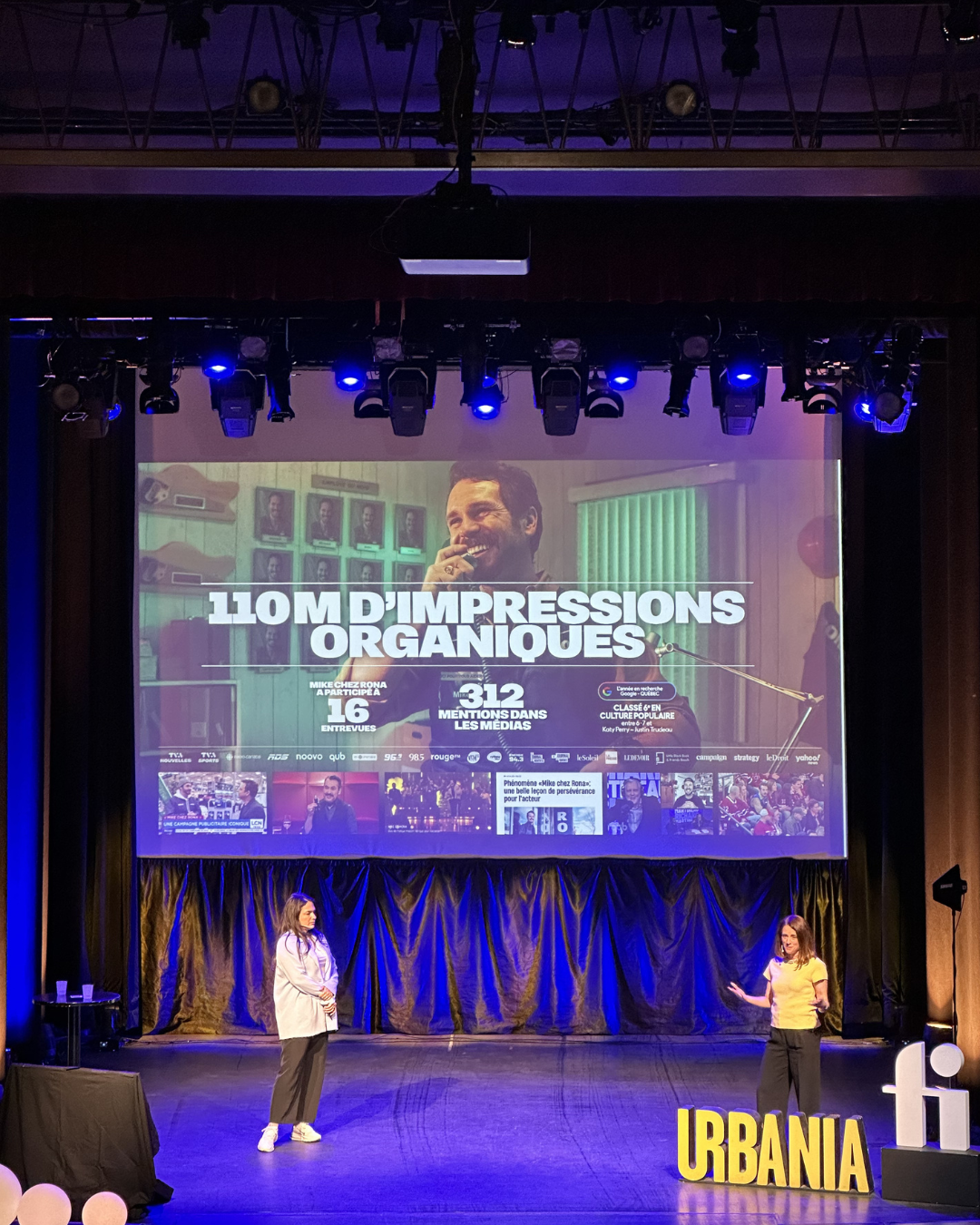
The panel featuring RONA and Sid Lee was probably one of the most inspiring of the day.
The goal was simple: to restore RONA’s place in the hearts of Quebecers after the Lowe’s years.
The "Mike at RONA" campaign quickly became a cultural phenomenon.
The teams didn't just launch an ad.
They have increased the number of touchpoints:
partnership with the Montreal Symphony Orchestra;
Mike's Halloween costumes;
figurines for Black Friday;
partnership with McDonald's;
karaoke version;
inclusion in the year-end broadcasts.
Result: 110 million organic impressions and a direct impact on brand perception and sales.
What we took away from the summit
If there is one conclusion that ties together virtually all of today’s panels, it is that consumers are increasingly seeking authenticity.
They want real stories. They want to see behind the scenes. They want to understand the process. They want to learn. They want to join the conversation.
And even in a world where artificial intelligence is becoming increasingly prevalent, it is still deeply human qualities—such as vulnerability, creativity, culture, and transparency—that forge the strongest connections.
Our team can help you develop your content strategy.